
In the vast world of comfort foods, few dishes strike a balance between hearty satisfaction and delicate nuance like a steaming bowl of ramen. Yet, for those who seek a plant-based twist without sacrificing depth or character, tofu ramen emerges as a culinary revelation. This article journeys into the art of crafting flavorful tofu ramen bowls, blending rich broths, vibrant vegetables, and perfectly prepared tofu to create a symphony of tastes that delight every palate. Whether you’re a seasoned vegan or just tofu-curious, prepare to discover how this humble ingredient transforms traditional ramen into a versatile masterpiece of flavor and texture.
Tofu Ramen: Selecting the Perfect Tofu for Ramen Mastering Broth Bases to Enhance Umami in Every Bowl Artful Toppings and Garnishes to Elevate Texture and Taste Customizing Spice Levels to Suit Every Palate
Tofu ramen is an exquisite fusion where silky, umami-rich broth meets the comforting creaminess of tofu, creating a nourishing bowl that warms the soul. Originating from the traditional Japanese culinary art of ramen, this dish transcends boundaries by inviting both vegetarians and meat-eaters to savor its layered, aromatic essence. Discovering the right tofu is the first step in elevating this dish-balancing firmness, flavor absorption, and texture to harmonize perfectly with the broth and toppings.
Prep and Cook Time
- Preparation Time: 25 minutes
- Cook Time: 40 minutes
- Total Time: 1 hour 5 minutes
Yield
Serves 4 hearty bowls
Difficulty Level
Medium – Ideal for those comfortable with layering flavors and multitasking components.
Ingredients
- Broth Base:
- 6 cups low-sodium vegetable broth
- 1 cup shiitake mushrooms, sliced
- 3 tablespoons miso paste (white or red)
- 2-inch strip kombu (dried kelp)
- 2 garlic cloves, smashed
- 1-inch fresh ginger, sliced
- 1 tablespoon soy sauce or tamari
- 1 teaspoon sesame oil
- Tofu:
- 14 oz extra-firm tofu, drained and pressed
- 2 tablespoons soy sauce
- 1 tablespoon maple syrup
- 1 teaspoon toasted sesame oil
- Noodles and Toppings:
- 12 oz fresh or dried ramen noodles
- Soft-boiled eggs, halved (optional)
- 1 cup baby spinach or bok choy leaves
- 2 scallions, thinly sliced
- 1 sheet nori, sliced into strips
- 1 tablespoon toasted sesame seeds
- 1/2 cup corn kernels, fresh or thawed
- Chili oil or shichimi togarashi for spice customization
Instructions
- Prepare the Tofu: Cut the pressed tofu into thick rectangular slices. In a small bowl, whisk together the soy sauce, maple syrup, and toasted sesame oil. Marinate the tofu in this mixture for at least 15 minutes to infuse flavor deeply.
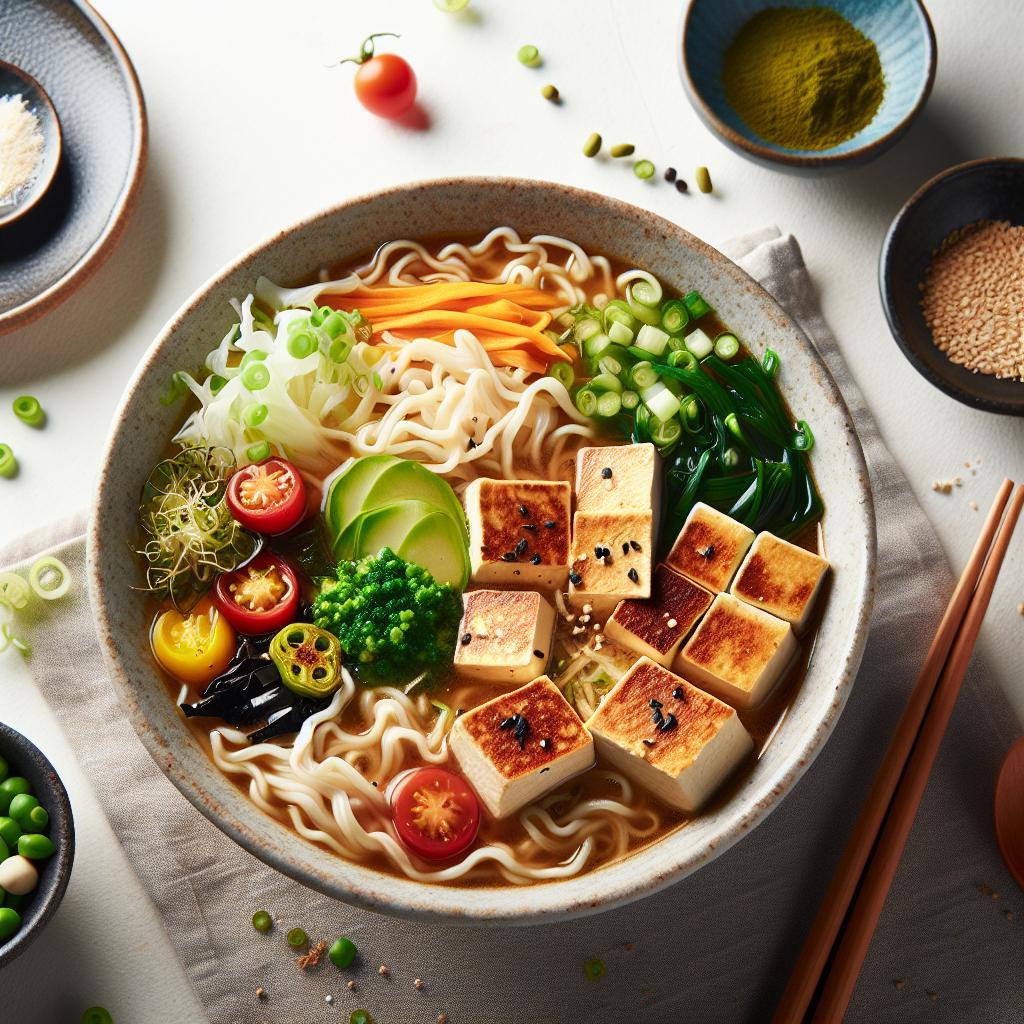
- Sear the Tofu: Heat a non-stick skillet over medium heat. Place marinated tofu slices and sauté until golden brown and slightly crisp on both sides, about 4 minutes per side. Remove and set aside, keeping warm.
- Make the Broth: In a large pot, combine vegetable broth, shiitake mushrooms, kombu, garlic, and ginger. Bring to a simmer and cook gently for 25 minutes to develop a rich umami base. Remove kombu before the broth begins to boil to avoid bitterness.
- Season the Broth: Remove garlic and ginger slices from the broth. Whisk in the miso paste until fully dissolved, then stir in soy sauce and sesame oil for a luscious depth. Keep warm over low heat.
- Cook the Noodles: In a separate pot, cook ramen noodles according to package directions until just al dente. Drain and divide among serving bowls.
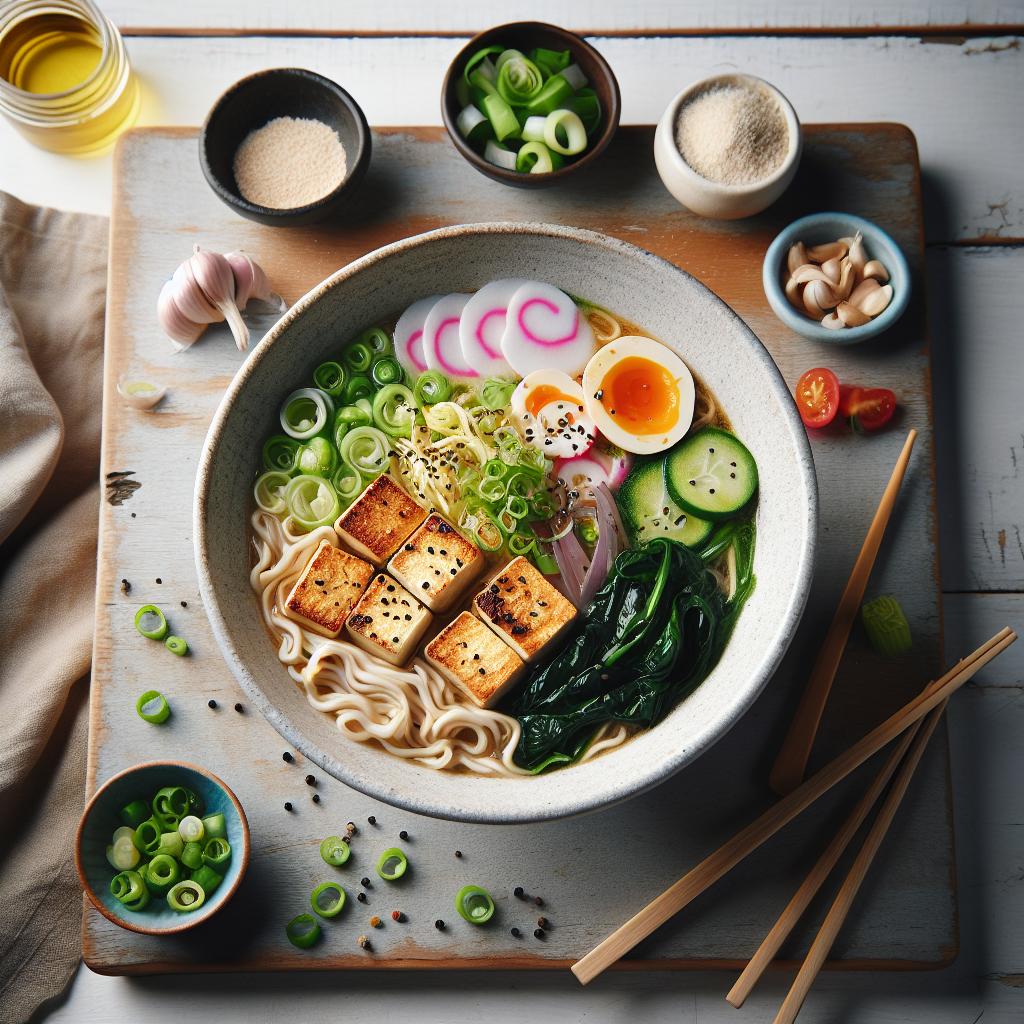
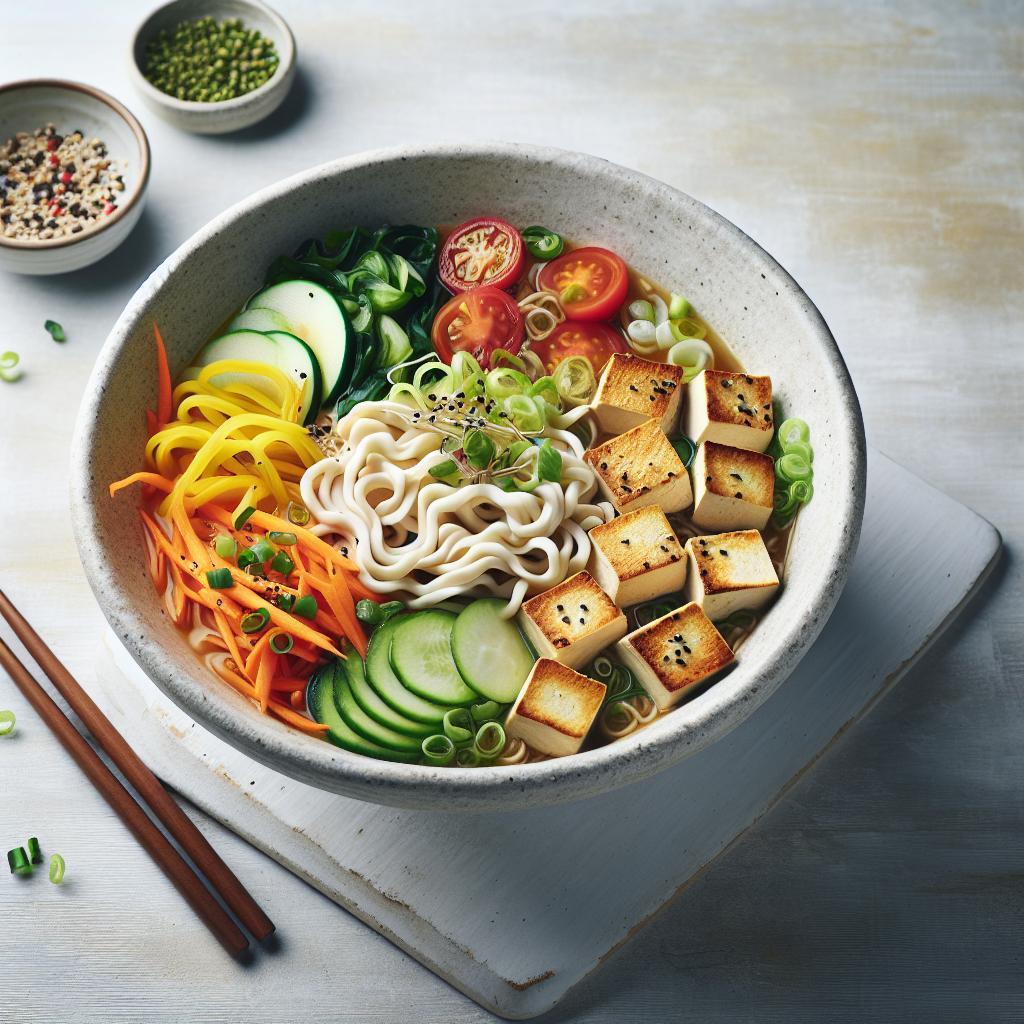
- Assemble the Bowls: Ladle hot broth over noodles. Arrange seared tofu slices, soft-boiled eggs, baby spinach or bok choy, corn, scallions, and nori elegantly atop each bowl to create a beautiful medley of textures and colors.
- Customize Spice Levels: Offer chili oil or sprinkle shichimi togarashi on the side so each diner can tailor the heat to their liking, amplifying the broth’s umami with fiery warmth as desired.
Tips for Success
- Choosing Tofu: Extra-firm tofu gives the best bite and absorbs marinade well without crumbling. Press the tofu for at least 30 minutes to remove excess moisture-this is key to achieving crispy edges when seared.
- Broth Mastery: Slow simmering allows the kombu and mushrooms to release natural glutamates, amplifying umami without additional MSG. Avoid boiling kombu to prevent bitterness.
- Make Ahead: Broth can be prepared 2 days in advance and refrigerated. Gently reheat before serving and stir in fresh miso just prior to ladling over noodles.
- Variations: Substitute tofu with tempeh or seitan for different textures and proteins, or add miso-marinated eggplant for a smoky twist.
- Spice Customization: Incorporate spicy chili oil into the marinade for a flavorful punch or keep the broth mild, letting diners adjust heat at the table.
Serving Suggestions
Serve bowls steaming hot with a side of crunchy pickled ginger and a small dish of soy sauce for dipping tofu. Garnish with fresh scallions for brightness and a sprinkle of toasted sesame seeds for nutty crunch. Pair with a chilled green tea or a light sake to complement and refresh the palate. For visual flair, scatter a few edible flowers like shiso blossoms over the toppings or serve with a clean white ceramic bowl to let the colors of the ingredients shine.

| Nutrient | Amount per Serving |
|---|---|
| Calories | 420 kcal |
| Protein | 18 g |
| Carbohydrates | 52 g |
| Fat | 12 g |
Elevate your tofu ramen experience by exploring more plant-forward recipes in our Vegan Asian Recipes Collection. For deeper insight on the health benefits of fermented miso and its umami-boosting properties, visit this NIH research article.
Q&A
Q&A: Tofu Ramen – Crafting Flavorful Bowls for Every Palate
Q1: What makes tofu ramen stand out from traditional ramen dishes?
A1: Tofu ramen elevates the humble soy cube to star status, offering a plant-based protein that soaks up the broth’s umami like a sponge. Unlike traditional pork or chicken-based ramen, tofu ramen is a versatile, lighter, and often healthier option that still delivers deep, satisfying flavors. Its texture ranges from silky soft to crispy fried, adding delightful contrasts within the bowl.
Q2: How do I create a flavorful broth for tofu ramen?
A2: The secret lies in layering umami-rich ingredients. Start with a vegetable broth base enhanced with kombu (dried kelp) and dried shiitake mushrooms to build depth. Add miso paste, soy sauce, or tamari for savory complexity. A touch of ginger, garlic, and toasted sesame oil brings warmth and aroma. Simmering the broth slowly allows the flavors to meld, creating a rich, comforting foundation.
Q3: What are the best ways to prepare tofu for ramen?
A3: Preparation can vary depending on your preference. Silken tofu can be gently added for creamy, delicate bites, while firm tofu can be pressed, cubed, and pan-fried or baked to develop crispy edges and a hearty texture. Marinating tofu before cooking infuses it with complementary flavors-think soy, mirin, and a hint of chili for a subtle kick.
Q4: Which toppings complement tofu ramen to suit different palates?
A4: For traditionalists, classic toppings like soft-boiled eggs, nori, and scallions work beautifully. Veggie lovers might enjoy sautéed spinach, corn kernels, bamboo shoots, and mushrooms. To suit adventurous palettes, try adding kimchi, pickled ginger, or spicy chili oil. The beauty of tofu ramen is that toppings can be endlessly customized, making each bowl a canvas of flavor.
Q5: Can tofu ramen be adapted for gluten-free or vegan diets?
A5: Absolutely! Use tamari instead of soy sauce for a gluten-free option, and ensure the noodles are made from rice or other gluten-free grains. For vegan versions, skip the eggs and opt for seaweed, tofu crumbles, or mushrooms to add richness and texture. Homemade broths avoid animal products by relying on vegetables, dried seaweed, and mushrooms to build complexity.
Q6: What tips can help novices craft restaurant-quality tofu ramen at home?
A6: Patience is key-allow your broth plenty of time to develop flavor. Don’t underestimate the power of homemade elements: fresh noodles, carefully cooked tofu, and thoughtfully prepared toppings. Layer your seasoning gradually, tasting as you go. Lastly, presentation matters; garnish with bright herbs and a drizzle of sesame oil to create a bowl that’s both delicious and visually inviting.
Q7: How does tofu ramen embody the idea of “flavorful bowls for every palate”?
A7: Tofu ramen is a culinary chameleon-its base broth and tofu can adapt to sweet, savory, spicy, or mild preferences. Whether you crave hearty or light, traditional or inventive, tofu ramen welcomes all tastes by allowing endless customization. It’s a bowl of warmth and comfort accessible to meat-eaters, vegans, gluten-free eaters, and flavor seekers alike.
Insights and Conclusions
As the steam rises from your bowl of tofu ramen, you’re not just savoring a meal-you’re experiencing a harmonious blend of tradition and innovation. From silky tofu that soaks up every nuanced note to broths that range from rich and hearty to light and floral, tofu ramen invites you to explore a spectrum of flavors crafted for every palate. Whether you’re a longtime ramen devotee or a curious newcomer, this versatile dish promises comfort and creativity in every slurp. So next time hunger calls, remember: the perfect tofu ramen is more than just food-it’s an invitation to taste the art of balance, one flavorful bowl at a time.